TS2023 Policy Brief
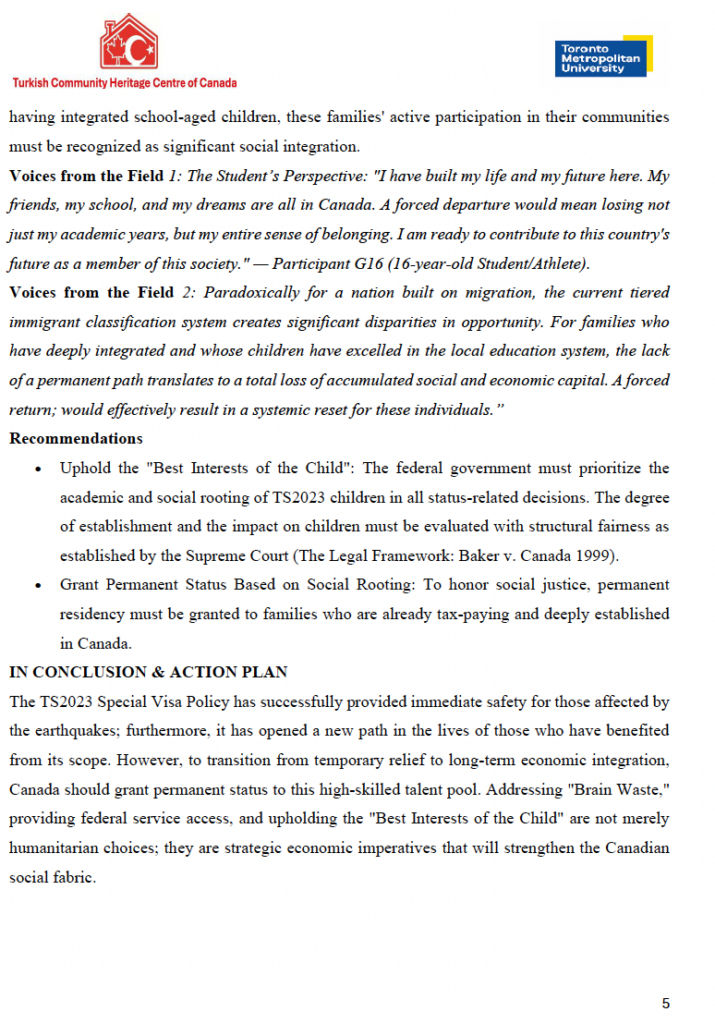
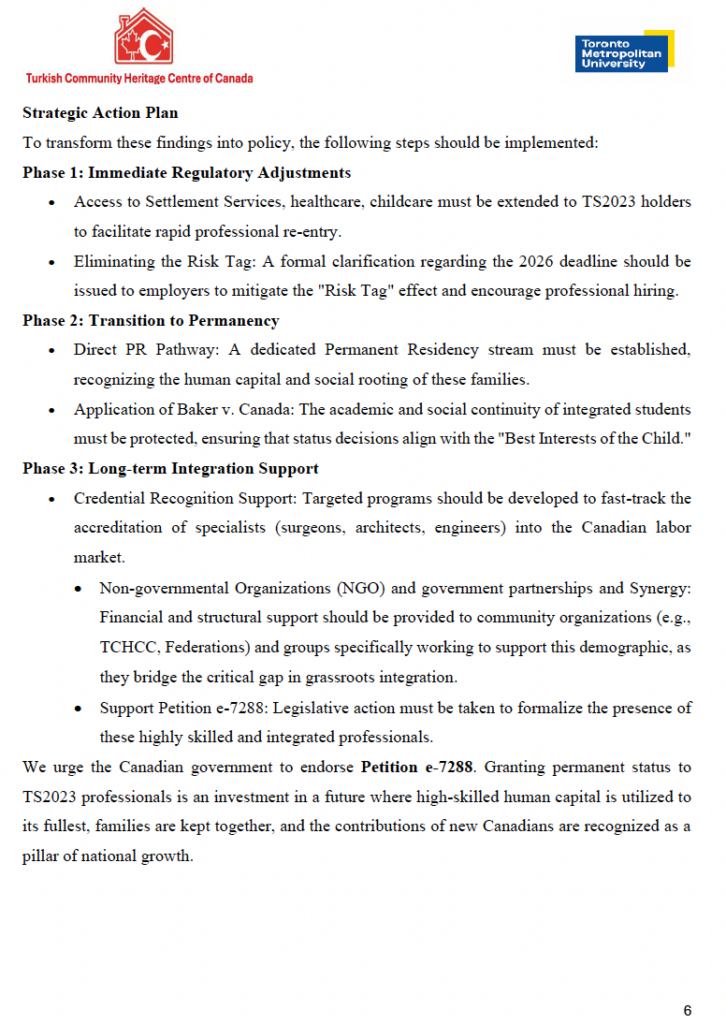
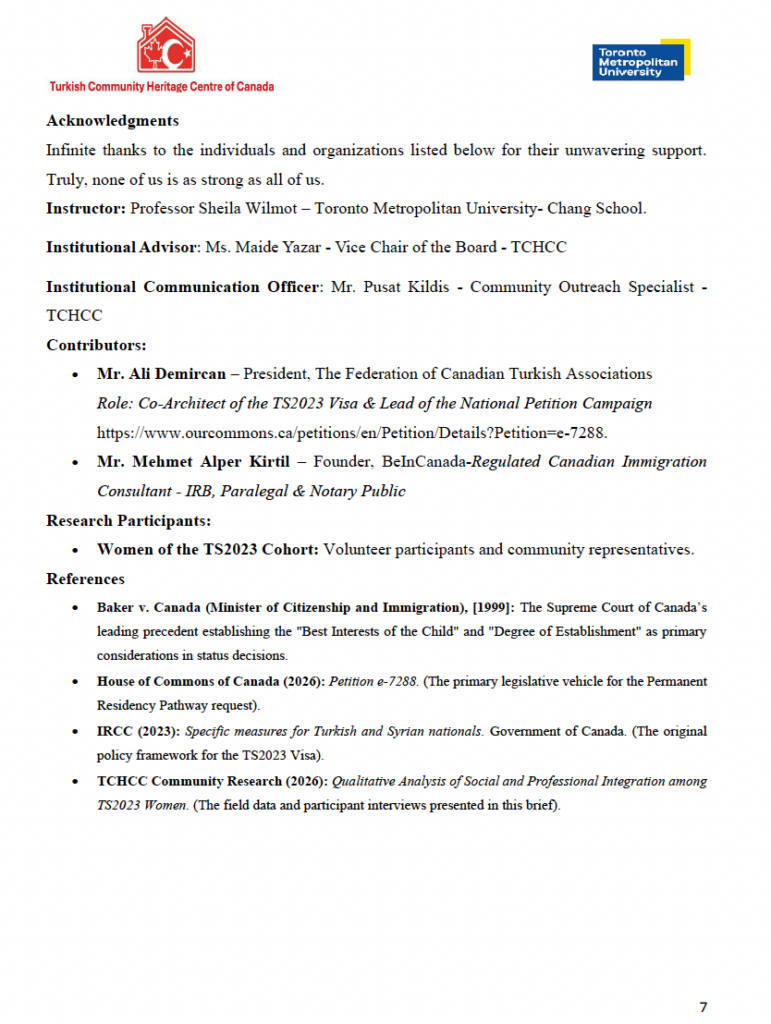
The TS2023 Visa Policy Brief is now available. Prepared by our volunteer, Dr. Banu Yaman Ortaş, the brief explores the social integration experiences, future expectations, and permanent residency challenges of women who arrived in Canada through the TS2023 visa policy.
EXECUTIVE SUMMARY
The Purpose of This Brief: This policy brief addresses critical gaps in Canada’s TS2023 (IRCC, 2023). Special Visa Policy, which provided three-year open work permits and essential safety for those affected by the February 2023 earthquakes in Türkiye. The policy resulted in these Visa holders, including a group of highly skilled professionals, living in a state of legal and employment limbo. This document outlines four strategic issues and makes recommendations to transition this talented workforce from temporary status to permanent economic contributors in Canada.
The Research Context: Conducted under the auspices of Toronto Metropolitan University (TMU), this research analyzed the lived experiences of women who arrived via the TS2023 visa. The findings and recommendations will promote Canada’s use of significant pool of human capital.
Key findings and recommendations focus on four areas: (1). Professional Deskilling and Systemic “Brain Waste” – An analysis of the critical underutilization of high-skilled human capital, where specialists (surgeons, architects, and senior executives) are restricted to low-skilled “survival jobs” due to structural barriers; (2): The Absence of a Permanent Residency (PR) Pathway – Evaluating the long-term socio-economic implications of the lack of status regularization for TS2023 visa holders and its impact on Canada’s talent retention goals; (3). The Service Gap: Exclusion from LINC & Integration Programs – Addressing the systemic denial of federal language training (LINC) and settlement services, which halts the professional accreditation and social integration of earthquake-affected potential workforce; and, The “Risk Tag” Effect on Employment – Investigating how legal status uncertainty and the 2026 deadline act as a deterrent for employers, effectively paralyzing the career trajectories of high-potential candidates; and, (4). The Best Interests of the Child & Social Rooting – Legal and humanitarian impact of TS2023 policy on children’s deep integration into Canadian society, framing their academic future and belonging through the lens of the Baker v. Canada precedent.
Strategic Goals: Key recommendations resulting from our findings are: (1)-Establish a Direct PR Pathway for TS2023 holders to retain high-skilled talent. (2)-Grant immediate access to Federal Settlement Services, childcare, health care to facilitate integration. 3-Uphold the “Best Interests of the Child” (Baker v. Canada) principles by recognizing the establishment of these families in Canada.
You can find the full brief below, and you can also read it through this link. Link